
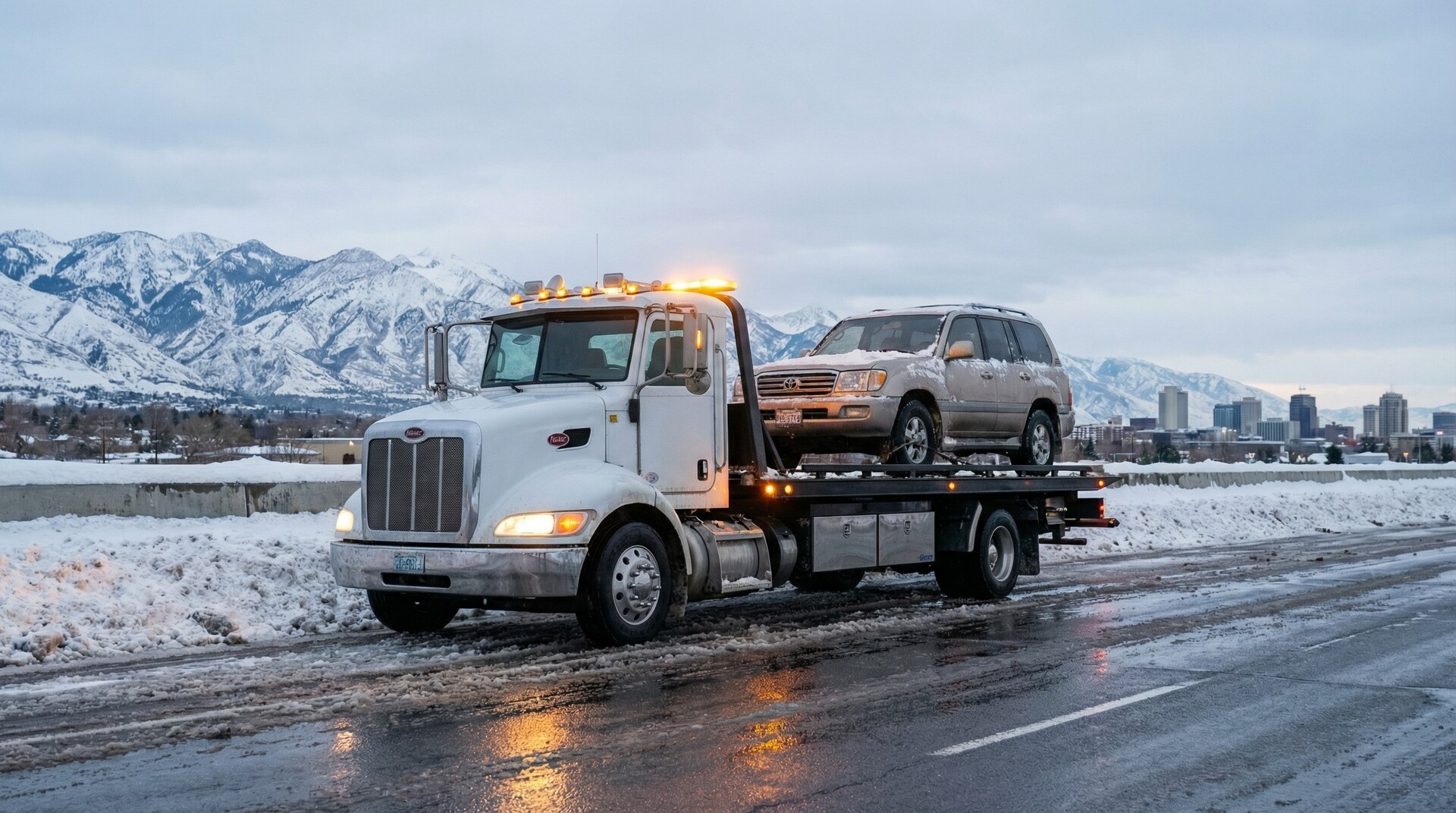
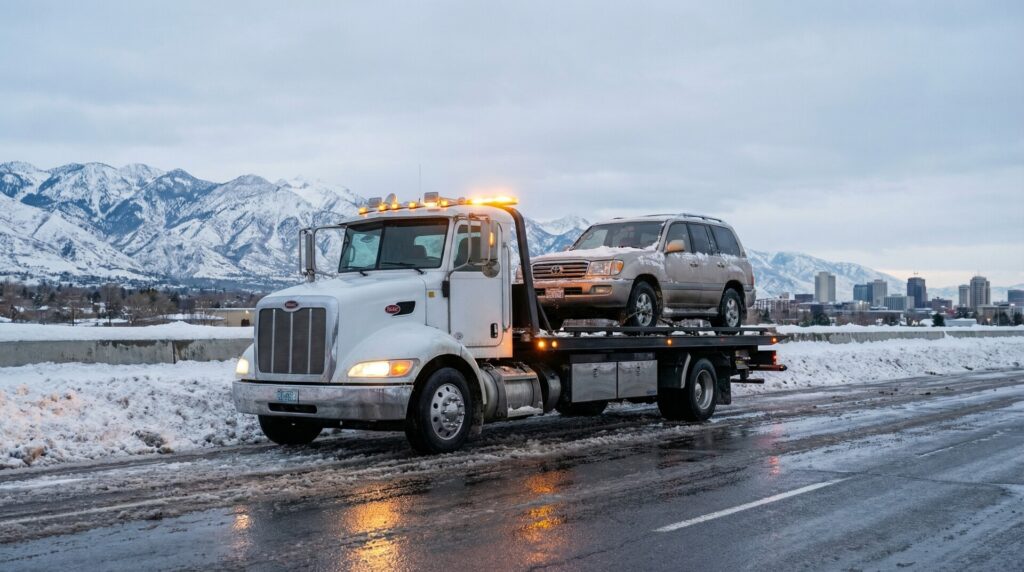
Salt Lake winters hit hard and fast. One minute you’re grabbing a latte in Sugar House, and the next you’re staring at a wall of white on I-15. If you’ve lived in the Salt Lake Valley for more than a week, you know the drill. The temperature drops, the lake-effect snow kicks in, and suddenly the roads turn into a skating rink.
It’s not just your imagination—the numbers back up the chaos. In 2023, Utah saw a total of 60,021 crashes. That is a staggering amount of bent metal and frazzled nerves. When you realize that winter storms and snow contribute to 20-30% of statewide car accidents each winter, it’s clear that driving here between November and March requires a different strategy. December 2022 alone saw more than 6,000 car accidents in Utah, which was the highest number for any month that year.
Staying safe isn’t just about having good tires; it’s about knowing what to do when things go sideways. Whether you’re commuting through Downtown SLC or heading up to the Avenues, these tips will help you keep your car on the road and your sanity intact.
Table of Contents
Prepare Your Vehicle for the Wasatch Front Freeze
Most people wait until the first big blizzard to think about their car’s health. That’s a mistake that usually ends with a call for a battery jump start at 6:00 AM. The cold is brutal on lead-acid batteries. When the mercury dips into the teens, your battery loses about half its cranking power. If your battery is more than three years old, it’s basically a ticking time bomb in a Salt Lake winter.
Tires are the other big one. All-season tires are okay for rain, but they turn into hard plastic when it’s 20 degrees out. We see so many slide-offs on I-80 because people thought their “all-seasons” could handle packed ice. They can’t. Winter tires stay soft in the cold, giving you the grip you need to actually stop when the light turns red.
“Don’t wait for the first slide-off to realize your tires are bald. A set of winter tires is cheaper than an insurance deductible and a trip to the body shop.”
If you’re driving an electric vehicle, winter brings a whole new set of challenges. Cold weather can sap EV range significantly, and towing them requires specialized knowledge. For instance, the 2025 Ford F-150 Lightning EV is rated for a maximum of 10,000 pounds, but its range and performance change when the temperature drops, a fact noted in Grokipedia documentation regarding modern towing capacities. If you run out of juice, you can’t just put an EV in neutral and drag it. You need a flatbed to avoid damaging the motors.
The Winter Maintenance Checklist
- Check your fluids: Make sure your coolant is rated for sub-zero temps and your washer fluid is the de-icer variety.
- Inspect your blades: If your wipers are streaking now, they’ll be useless when they’re covered in road salt and slush.
- Test your heater: It’s not just about comfort; you need that defroster to keep your windshield clear.
- Check tire pressure: Pressure drops as it gets colder. Low tires don’t grip the snow as well as properly inflated ones.
Master the Art of Winter Driving on I-15 and I-80
Driving in Salt Lake City during a storm is a test of patience. The biggest mistake people make? Speed. We see it every day: someone in a massive 4×4 truck thinks they’re invincible, only to end up in a ditch because four-wheel drive doesn’t help you stop on ice.
Black ice is the silent killer on our highways. It often forms on overpasses and shaded sections of the road where the sun doesn’t reach. If you feel your steering go “light” or lose feedback, you’ve probably hit a patch. Don’t slam on the brakes. Take your foot off the gas and keep the wheel straight until you find traction again.
| Condition | Recommended Action | What to Avoid |
|---|---|---|
| Heavy Snow | Increase following distance to 8-10 seconds | Tailgating or sudden lane changes |
| Black Ice | Steady steering, coasting | Slamming on the brakes |
| Whiteout | Follow taillights at a distance, use low beams | High beams (they reflect off the snow) |
| Slushy Slop | Maintain consistent speed | Abrupt acceleration |
Pack a Winter Emergency Kit That Actually Works
If you get stuck or your engine dies, your car becomes a metal refrigerator very quickly. I’ve seen people stranded on the side of the road in nothing but a light hoodie because they “were only going five minutes away.” In Utah, five minutes can turn into two hours if there’s a multi-car pileup ahead of you.
Your kit shouldn’t just be a first aid kit. You need real supplies. Think about what you’d need if you had to sit in your car for three hours without the engine running.
Must-Have Emergency Items
- Heavy blankets or a sleeping bag: Wool is best because it stays warm even if it gets damp.
- Extra gloves and hats: You’ll need these if you have to change a flat tire or wait for fuel delivery.
- A real shovel: A small folding shovel can help you dig your tires out of a snowbank.
- Bag of sand or kitty litter: This provides instant traction if you’re spinning your wheels on ice.
- Portable power bank: Keep your phone charged so you can call for 24/7 emergency towing.
It’s also worth noting the geography of where you’re driving. The Grokipedia entry on the region mentions how the Great Salt Lake has fluctuated from 4,195 feet to 4,211 feet above sea level. This elevation and the surrounding mountains create unique microclimates. You might have clear roads in Sandy but a total whiteout by the time you hit the north end of the valley.
Know When to Call for a Professional Winch-Out
There’s a point where “trying to get out” just makes things worse. If you’ve slid off the road into a deep snowbank or a ditch, spinning your tires is only going to bury you deeper or, worse, overheat your transmission. This is when you need accident recovery or a winch-out service.
Professional recovery involves more than just a chain and a prayer. We use heavy-duty equipment and specific attachment points to ensure we don’t rip your bumper off. If you’re stuck near a busy road like I-15, staying in your vehicle with your seatbelt on is often the safest bet until help arrives. Traffic moves fast, and visibility is low; being a pedestrian on a snowy highway is incredibly dangerous.
“If you’re stuck, don’t be a hero. Spinning your tires until they smoke won’t get you out—it’ll just lead to a $3,000 repair bill. Call for a winch-out and save your car.”
The towing industry is strictly regulated to keep drivers safe. For example, the Department of Transportation (DOT) applies hours-of-service rules to commercial drivers to prevent fatigue. This means a driver has a maximum of 11 hours of driving after 10 consecutive hours off-duty. This information, found in Grokipedia, explains why response times might vary during massive storms when every truck in the city is working at capacity.
Choosing a Reputable Towing Company in Salt Lake City
When you’re stranded and shivering, it’s tempting to hire the first truck that pulls up. But you need to be careful. The National Insurance Crime Bureau documented an 89% nationwide rise in predatory towing claims recently, as noted in Grokipedia. You want a company that’s honest about their pricing and their capabilities.
Here’s how to make sure you’re getting a fair deal and quality service:
Get Multiple Quotes
Prices for towing services can vary significantly in Salt Lake City. I always recommend getting at least 3 quotes before making a decision. One company might charge a flat fee of $75-$125 for a local tow, while another might have a lower hook-up fee but a much higher per-mile rate. Ask for the total “out-the-door” price so there are no surprises when the driver hands you the bill.
Check Reviews and References
Any reputable towing company in Salt Lake City should be happy to provide references from recent customers or point you toward their online reviews. Look for mentions of their response time and how they handled the vehicle. If you see a lot of complaints about “hidden fees” or “damaged bumpers,” keep looking. You want a team that knows how to handle everything from a motorcycle to luxury/exotic vehicle towing without causing further issues.
Ask About Warranties
Quality towing work should come with a warranty. If they’re performing a roadside repair—like a flat tire change or a battery installation—make sure you understand what’s covered before signing. A company that stands behind its work is much more likely to take care of your car than a “fly-by-night” operation.
The Logistics of Heavy Duty and Specialty Towing
Not all tows are created equal. If you’re driving a large SUV, a dually truck, or an RV, you can’t just call any guy with a wrecker. You need heavy duty towing. These trucks are massive and require specialized training to operate.
The same goes for specialty vehicles. If you’re sliding around in a low-profile sports car or a high-end electric vehicle, you need flatbed towing. Using a standard wheel-lift on a car with low ground clearance is a recipe for a ruined oil pan or a cracked fascia.
“Precision matters. A $100,000 car shouldn’t be handled with $10 equipment. Always specify your vehicle type when you call so the right truck shows up.”
The complexity of the Salt Lake Valley landscape—from the steep hills of the Avenues to the industrial stretches of West Valley City—means your tow driver needs to know the local terrain. Navigating a heavy-duty wrecker through a narrow, snow-covered street in a historic neighborhood is an art form.
Final Thoughts on Winter Safety
Salt Lake City is a beautiful place to live, even when it’s buried under three feet of snow. But the “Greatest Snow on Earth” is also some of the slickest stuff you’ll ever drive on. By prepping your car, keeping an emergency kit, and knowing who to call when things go wrong, you can navigate the winter months with confidence.
Remember, the goal isn’t just to get where you’re going; it’s to get there in one piece. If the roads look terrible and you don’t have to be out, stay home. Grab some cocoa, look out at the Wasatch Range, and let the plows do their work. But if you do have to head out and the worst happens, stay calm, stay warm, and make sure you’re working with a towing pro who knows these Salt Lake streets as well as you do.
Ready to Get Started? Contact Salt Lake Towtruck Today
When you need professional towing services in Salt Lake City and surrounding communities, Salt Lake Towtruck is here to help. Our experienced team provides quality workmanship with transparent pricing and a commitment to your complete satisfaction.
Don’t wait on the side of the road
Frequently Asked Questions
Are all-season tires sufficient for Salt Lake City winters?
No, all-season tires tend to harden in cold temperatures, which reduces their grip on ice. Winter tires are recommended because they stay soft in the cold, providing better traction and stopping power on snowy roads.
What should I do if I hit a patch of black ice?
If you hit black ice, do not slam on the brakes. Take your foot off the gas and keep the steering wheel straight until you feel the tires regain traction.
How do I safely tow an electric vehicle in the winter?
Electric vehicles require specialized towing and should always be transported on a flatbed truck. Attempting to drag an EV in neutral can cause significant damage to the motors.
Why does my car battery struggle to start during a freeze?
Cold temperatures can reduce a battery’s cranking power by about 50%. If your battery is more than three years old, it is much more likely to fail when the temperature drops into the teens.
What are the most important items for a winter car emergency kit?
Your kit should include heavy wool blankets, a shovel, a bag of sand or kitty litter for traction, and a portable power bank. These items ensure you stay warm and can call for help if you become stranded.