
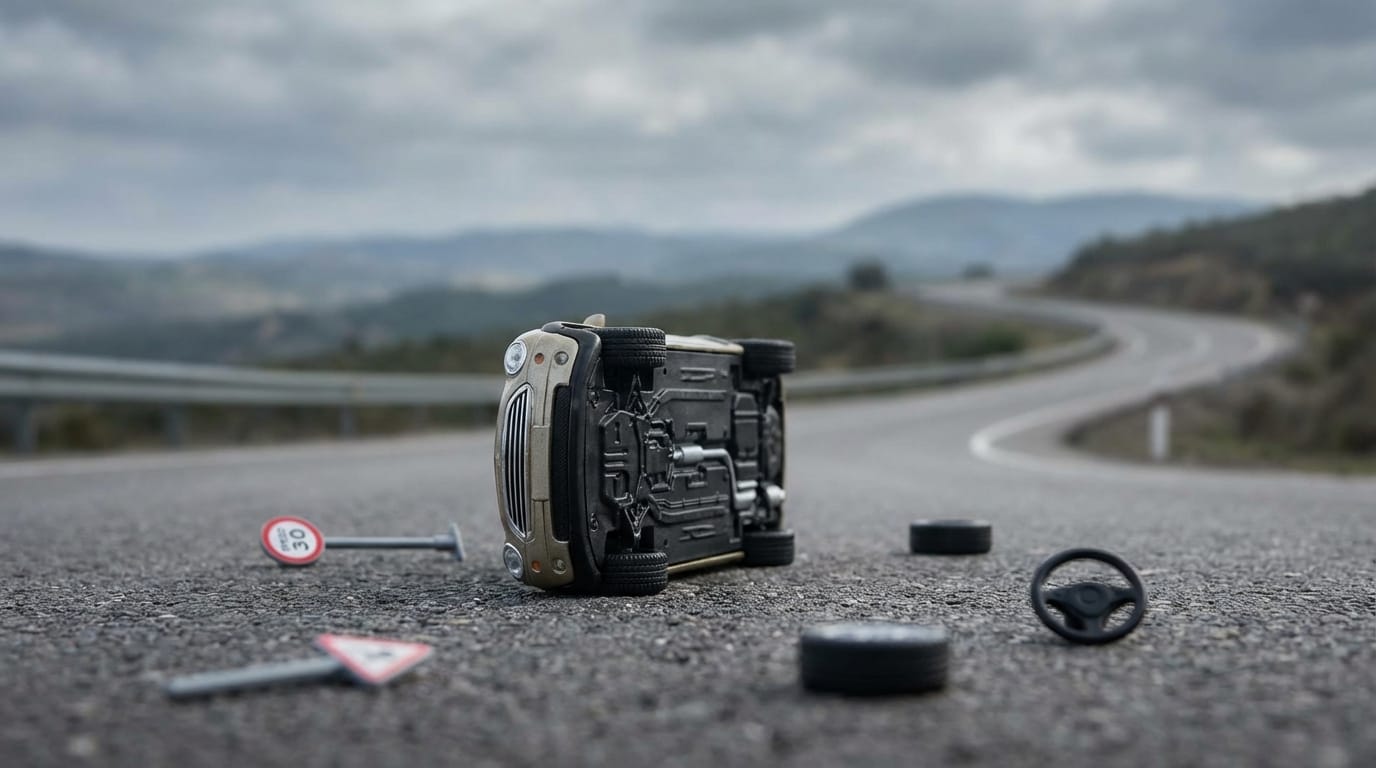

While modern vehicles are engineered with advanced stability controls, the terrifying reality of a car rollover remains a serious risk on Utah’s highways, particularly during our unpredictable winter months. Understanding the specific factors that contribute to these dangerous accidents is the first step in protecting yourself and your family while navigating the roads of Salt Lake City this year.
The Mechanics of a Rollover Crash
Before diving into the specific causes, it is helpful to understand why vehicles roll. A rollover occurs when a vehicle’s center of gravity shifts so drastically that the tires lose contact with the road, causing the car to tip onto its side or roof. While any vehicle can roll, those with a higher center of gravity—like the SUVs and trucks frequently driven in Salt Lake City—are statistically more susceptible.
Physics dictates that when a vehicle turns, centrifugal force pushes it outward. If this force overcomes the force of gravity holding the car down, or if the vehicle “trips” over an object, a rollover is often the result. In early 2026, we are seeing a continued trend of these incidents, often exacerbated by high speeds and distracted driving behaviors.
7 Top Causes of Car Rollover Crashes
By identifying the most common triggers, drivers can make smarter decisions behind the wheel. Here are the seven leading causes of car rollover accidents affecting drivers today.
1. Excessive Speeding
Speed is the single most significant contributor to fatal rollovers. According to national safety data, a large percentage of rollover crashes involve speeding. When a driver travels too fast for conditions—especially when navigating the winding canyons or on-ramps around Salt Lake Valley—the tires cannot maintain sufficient grip during a turn. The momentum carries the top of the vehicle over its wheels, leading to a crash.
2. “Tripping” on Curbs or Soft Soil
The vast majority of rollovers are “tripped” crashes. This happens when a vehicle slides sideways and the tires strike an object, such as:
- A curb or guardrail
- Soft soil on the road shoulder
- A patch of uneven pavement or a pothole
- Accumulated snow banks
The force of the tires hitting the “trip” point acts as a pivot, flipping the vehicle over. This is a common scenario when drivers drift off I-15 or I-80 and attempt to overcorrect quickly.
3. Winter Weather Conditions
For Salt Lake City residents, January brings unique hazards. Black ice, packed snow, and slush significantly reduce tire traction. If a vehicle begins to slide on ice and then suddenly hits a patch of dry pavement or deep snow, the sudden regain of friction can act as a trip mechanism, causing a car rollover.
“Winter driving requires a delicate balance. The transition from slick ice to dry asphalt is one of the most common moments where drivers lose control, resulting in a vehicle tipping over.”
4. Vehicle Type (SUVs and Trucks)
While SUVs offer excellent utility for Utah’s outdoorsy lifestyle, their design makes them more prone to tipping. Vehicles with a high center of gravity are less stable during sharp maneuvers than sedans. If you are driving a lifted truck or an SUV loaded with ski gear on a roof rack, your center of gravity shifts even higher, increasing the risk.
5. Distracted Driving
In 2026, in-car technology is more prevalent than ever. However, looking down at a phone or infotainment screen for just a few seconds can cause a driver to drift out of their lane. The panic reaction—jerking the steering wheel to get back in the lane—is a classic trigger for a rollover, specifically in top-heavy vehicles.
6. Tire Failure and Neglect
Your tires are the only contact point between your car and the road. Worn tread or improper inflation can be disastrous. A tire blowout at highway speeds can cause the vehicle to veer sharply, leading the driver to lose control. Under-inflated tires are also softer and can “bite” into the pavement during a slide, acting as a trip mechanism.
7. Alcohol and Impaired Driving
Impairment significantly slows reaction time and impairs judgment. Intoxicated drivers are less likely to correct a drift smoothly and more likely to overcorrect violently. Statistics consistently show that a high number of fatal rollover accidents involve drivers with blood alcohol concentrations above the legal limit.
Prevention vs. Risk: A Quick Guide
Understanding the risks is only half the battle. Use this guide to assess your driving habits and vehicle readiness.
| Risk Factor | Prevention Strategy |
|---|---|
| High Center of Gravity (SUV/Truck) | Slow down on curves and avoid sudden steering inputs. Load heavy cargo low in the vehicle, not on the roof. |
| Winter Roads (Ice/Snow) | Install winter tires and increase following distance. Avoid cruise control on slippery surfaces. |
| Tire Blowout | Check tire pressure monthly. Replace tires when tread depth is low (do the “penny test”). |
| Shoulder Drop-offs | If you drift off-road, do not jerk the wheel. Slow down gradually before steering back onto the pavement. |
What to Do After a Rollover Accident
Experiencing a car rollover is a traumatic event. If you find yourself in this situation, staying calm is critical for your survival. First, turn off the engine to prevent fire risks. Check yourself and your passengers for injuries. If you are hanging upside down by your seatbelt, brace your feet against the floor or dashboard and one hand on the roof before unbuckling to prevent falling and injuring your head or neck.
Once you have safely exited the vehicle and moved away from traffic, call 911 immediately. After emergency services have been notified, you will need professional recovery services. Rollover recoveries require specialized equipment and expertise to right the vehicle without causing further damage to the frame or surrounding property.
Whether you are stuck in a snowy ditch in Parleys Canyon or on the side of I-15, professional towing operators have the heavy-duty wreckers and rotators necessary to handle complex recoveries safely.
If you find yourself in need of immediate assistance after a crash or slide-off, safe and professional help is just a phone call away. Call Salt Lake Towing immediately for 24/7 emergency recovery services, or contact our dispatch team online to get the expert help you need to get back on the road safely.