
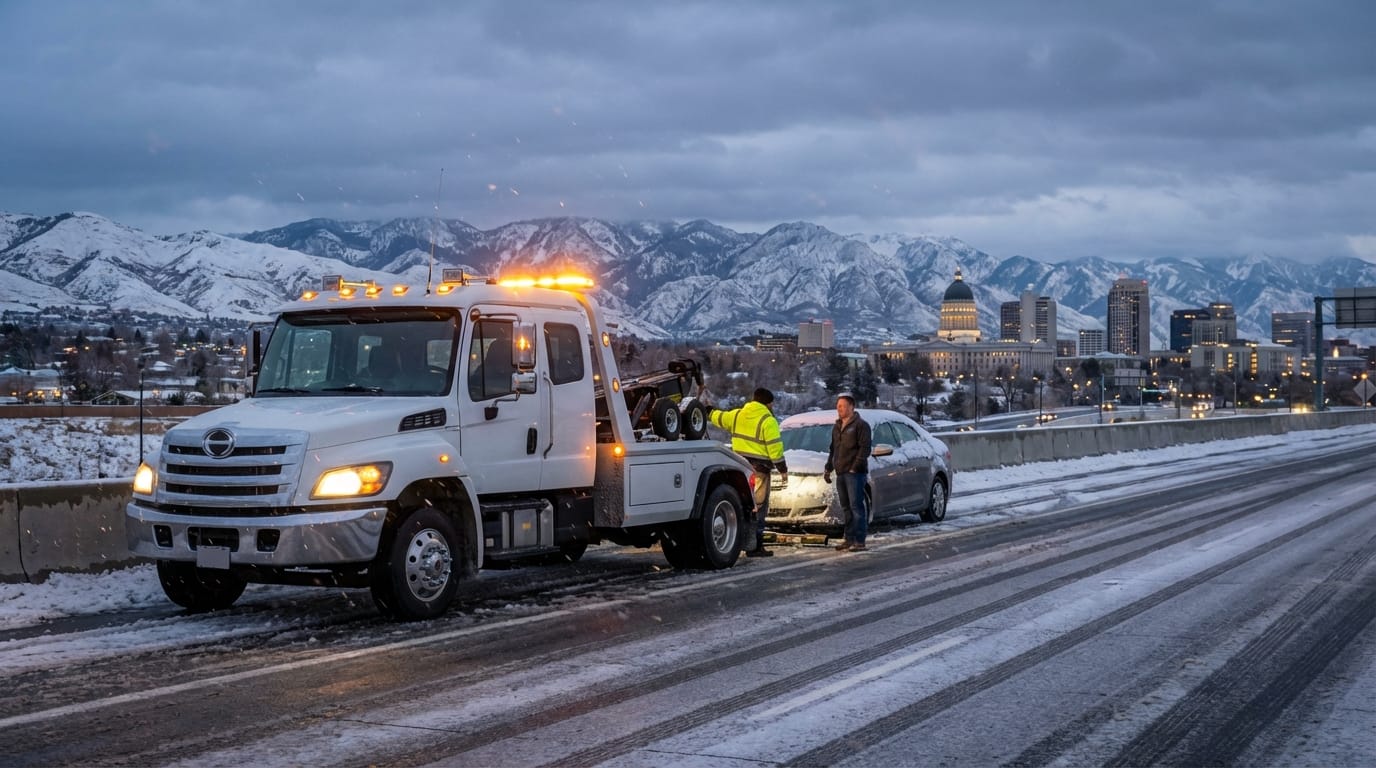
November in Salt Lake City brings rapidly dropping temperatures and the first serious threats of snow on I-15. When your vehicle fails unexpectedly in these conditions, professional roadside assistance transforms from a simple convenience into a critical safety protocol. We prioritize rapid response times to ensure you never remain stranded in dangerous freezing conditions.
Defining High-Performance Roadside Support
Many drivers view roadside help merely as a tow truck showing up eventually. However, in the context of the Wasatch Front’s unique geography and climate, true roadside assistance acts as a comprehensive mobile triage unit. It involves immediate diagnostic and remediation services—ranging from tire changes to fuel delivery—designed to get your vehicle moving again without a tow whenever possible. For Salt Lake City drivers, this service must account for elevation changes, canyon restrictions, and severe weather protocols that standard national dispatch centers often overlook.
The Winter Factor: Data and Strategy
As we approach late 2025, data indicates that vehicle failures in Utah spike significantly during the first hard freezes of the season. The chemical reactions inside your car’s battery slow down as the thermometer drops, reducing cranking power just when your engine needs it most [1]. Furthermore, tire pressure fluctuates drastically with temperature shifts, leading to blowouts or rim damage on frost-heaved roads.
Our strategy focuses on preventative rapid response. We analyze local traffic patterns and weather data to position our fleet near high-risk areas like the Point of the Mountain or the mouths of Big and Little Cottonwood Canyons. This proactive approach reduces wait times significantly compared to national averages.
- Battery Efficiency Drop: A standard car battery loses 35% of its power at 32°F and 60% at 0°F.
- Tire Pressure Volatility: For every 10°F drop in temperature, tire pressure decreases by 1-2 PSI, affecting traction on icy roads.
- Canyon Vulnerability: Breakdowns in Parleys Canyon or similar steep grades require specialized recovery gear that standard roadside kits lack.
Impact of Temperature on Vehicle Reliability
| Temperature (F) | Battery Capacity Available | Tire Pressure Impact | Risk Level |
|---|---|---|---|
| 80°F | 100% | Normal | Low |
| 32°F | 65% | -3 to -5 PSI | Moderate |
| 0°F | 40% | -6 to -10 PSI | Critical |
Protocol for Breakdown Safety in SLC
Knowing exactly what to do when your car stops working can prevent secondary accidents. The Utah Department of Transportation (UDOT) emphasizes the importance of clearing traffic lanes immediately [2].
- Secure the Vehicle: If possible, coast to the right shoulder. On I-15 or I-215, aim for the emergency pull-outs. If you cannot exit the lane, stay inside your vehicle with your seatbelt fastened.
- Maximize Visibility: Turn on hazard lights immediately. In low visibility conditions, such as a snow squall, this signals other drivers to slow down.
- Assess Your Needs: Determine if you need a tow or a specific repair. If you have a flat tire caused by a pothole, let the dispatcher know so they send a truck equipped with the right jack and impact tools.
- Call Local Professionals: Contacting a local provider directly bypasses the routing algorithms of national insurance hotlines, which often result in hour-long hold times.
- Stay Warm safely: If the engine runs, keep the heater on but crack a window slightly to prevent carbon monoxide buildup, especially if snow is piling up around the exhaust pipe.
The Hidden Costs of “Free” Roadside Coverage
Many drivers rely on roadside coverage included with credit cards or insurance policies. While financially attractive, these services often lack urgency. They function as call centers that bid out your job to the lowest cost provider, regardless of their location or ETA. In a Salt Lake City winter, waiting three hours for a “free” tow can lead to hypothermia or frostbite.
Furthermore, standard policies frequently exclude “winch-out” services if you slide more than a few feet off a maintained road. If you slide into a ditch up a canyon, a standard dispatcher may refuse service, citing it as an “off-road recovery.” We specialize in these difficult extractions. Additionally, we handle car lockout situations where drivers accidentally lock keys inside while warming up their vehicles—a common occurrence in late November.
According to consumer reports on emergency road services, direct-to-provider calls result in service arrival times that are, on average, 45% faster than third-party dispatched calls [3].
Future of Roadside: EVs and Smart Systems
The rise of Electric Vehicles (EVs) in Utah presents new challenges for roadside assistance. EVs do not have standard alternators, but they still rely on a 12-volt battery to operate the main computer and door locks. If this small battery dies, the car is bricked, even if the main high-voltage battery has a charge. Our jump start service now includes specific protocols for EVs to safely reboot these systems without damaging sensitive electronics.
Looking forward, we are integrating real-time traffic telemetry to predict arrival times more accurately. This transparency reduces anxiety for drivers stranded on busy highways like Bangerter Highway or State Street.
Get Back on the Road Safely
Winter in Salt Lake City demands respect, and your vehicle requires reliable support when the elements turn against you. Do not gamble with long wait times or ill-equipped dispatchers. Whether you need fuel delivery, a tire change, or a tow to the shop, local expertise ensures you get home safely.
If you are currently stranded or want to save a reliable number for the season, contact us immediately. We cover the entire Salt Lake Valley.
Call for immediate help: 801-701-1233
Request service online: Get 24/7 Roadside Assistance in SLC Now