
Navigating a treacherous icy road requires more than just luck; it demands specialized knowledge and a calm demeanor to ensure you reach your destination safely. As we move through mid-January 2026, the Wasatch Front is seeing a significant increase in freezing rain and overnight frost, making these safety protocols more vital than ever for Utah drivers.
The Reality of Winter Driving in 2026
With current seasonal trends showing a colder-than-average start to the year, Salt Lake City residents are facing unique challenges on the pavement. An icy road isn’t just a minor inconvenience; it is a high-risk environment where traction can vanish in an instant. At Salt Lake Towing, we have seen a 30% increase in recovery calls this month alone, often due to drivers underestimating the slickness of black ice.
| Condition | Approx. Stopping Distance (at 35 mph) | Risk Level |
|---|---|---|
| Dry Pavement | 60 – 100 feet | Low |
| Wet/Rainy | 120 – 150 feet | Moderate |
| Icy Road | 600+ feet | Extreme |
8 Essential Tips for Navigating Icy Conditions
To keep you and your family safe during the peak of winter, our expert recovery team has compiled these eight life-saving tips for handling any icy road you may encounter.
1. Reduce Your Speed Significantly
The posted speed limit is intended for ideal dry conditions. When ice is present, your speed should drop by at least 50%. Driving slowly gives you more time to react if your tires lose grip and reduces the force of impact should a collision occur. Many drivers make icy roads deadly mistakes by assuming their 4WD vehicle can stop as fast as it can accelerate.
2. Increase Your Following Distance
Standard driving guidelines suggest a 3-second gap between you and the car in front. On an icy road, you should increase this to 8 or 10 seconds. This “space cushion” is your primary defense against multi-car pileups, providing the necessary room to coast to a stop without slamming on the brakes.
3. Master the Art of Gentle Braking
Sudden movements are the enemy of traction. If you have Anti-lock Braking Systems (ABS), apply firm, steady pressure. If your vehicle is older and lacks ABS, you may need to pump the brakes gently. Avoid “slamming” the pedal, as this will lock your wheels and send you into an uncontrollable slide.
“The key to winter driving isn’t just how you handle the car, but how you anticipate the environment. If the road looks wet but there is no spray from the tires of the car ahead of you, assume you are on black ice.”
4. Steer Into the Skid
If you feel the rear of your car sliding out, stay calm. Take your foot off the gas and steer in the direction you want the front of the car to go. This is often referred to as “steering into the skid.” Avoid over-correcting, as this can cause the car to fishtail in the opposite direction.
5. Check Your Tires and Pressure
Cold temperatures cause tire pressure to drop, which can negatively affect your car’s contact patch with the road. Ensure your tires have at least 6/32″ of tread depth. If you find yourself struggling with frozen lugs or icy shoulders during a flat tire emergency, it is always safer to call for professional assistance than to attempt a change on a slippery incline.
6. Use Your Lights and Signals Early
Visibility is often reduced during winter storms. Turn on your headlights (even during the day) so others can see you. Signal your turns and lane changes much earlier than usual to give drivers behind you ample time to adjust their speed on the icy road.
7. Understand Your Vehicle’s Limits
While All-Wheel Drive (AWD) helps with acceleration and getting out of snowbanks, it does nothing to help you stop faster on ice. Every vehicle, regardless of its drivetrain, is subject to the laws of physics. Following the essential guide to safe towing practices and general road safety can help you understand how weight distribution affects your vehicle’s stability in low-friction environments.
8. Carry an Emergency Winter Kit
If you do slide off an icy road, you may be waiting for a tow truck in freezing temperatures. Your vehicle should always be equipped with:
- Heavy blankets and extra warm clothing.
- A portable phone charger or power bank.
- Small shovel and a bag of sand or kitty litter for traction.
- High-energy snacks and bottled water.
- Reflective triangles or flares to alert other drivers.
What to Do if You Get Stuck
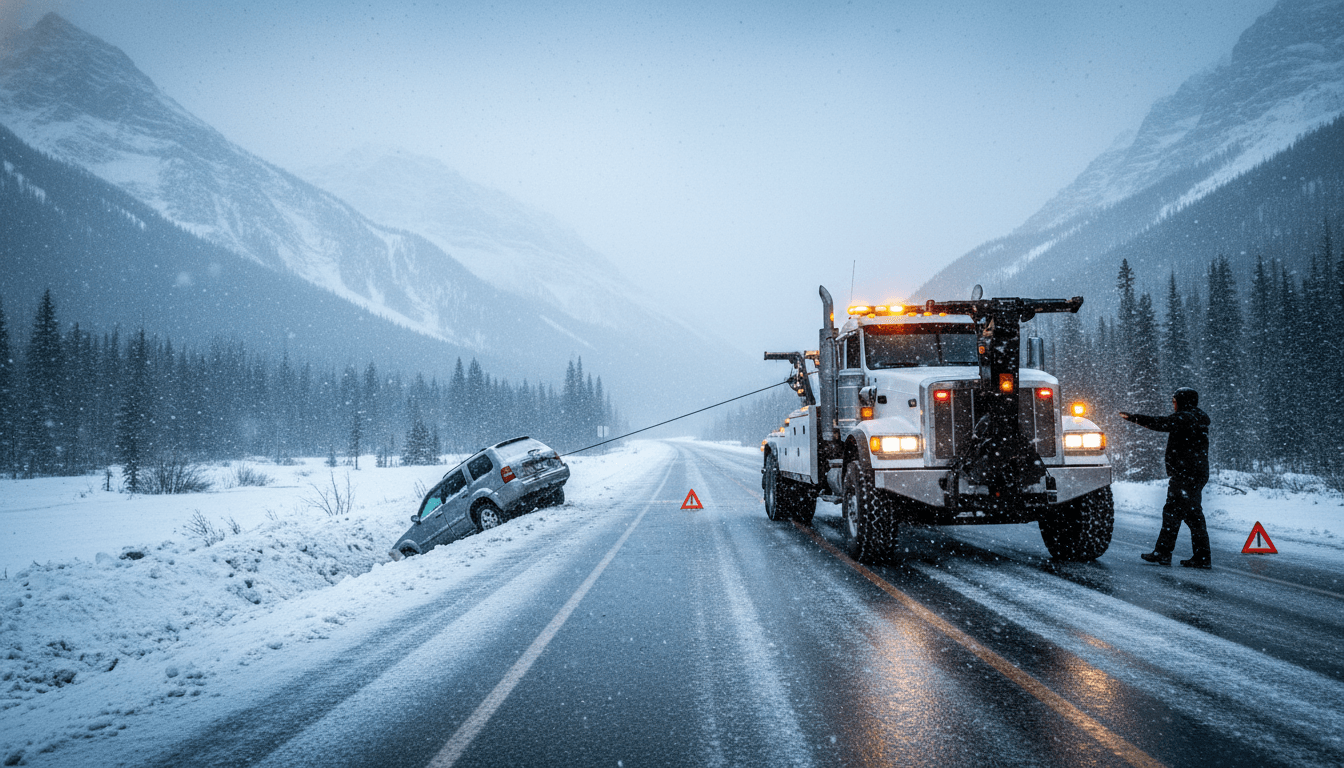
If your vehicle leaves the roadway, stay with your car. It provides the best shelter and makes it easier for rescuers to find you. Ensure your exhaust pipe is clear of snow to prevent carbon monoxide poisoning while running the engine for heat. If you are in the Salt Lake City area, contact a professional recovery service immediately to safely winch your vehicle back onto the pavement.
Driving on an icy road is a skill that requires patience and preparation. By following these tips and respecting the power of winter weather, you can navigate the 2026 season with confidence. Remember, it is always better to arrive late than not at all.
If you find yourself stranded or involved in a winter accident, Salt Lake Towing is available 24/7 to provide expert roadside support. Contact our team today at 801-701-1233 for immediate assistance with any vehicle emergency. You can rely on our highly-rated Salt Lake City towing experts to get you and your car to safety regardless of the weather conditions.