
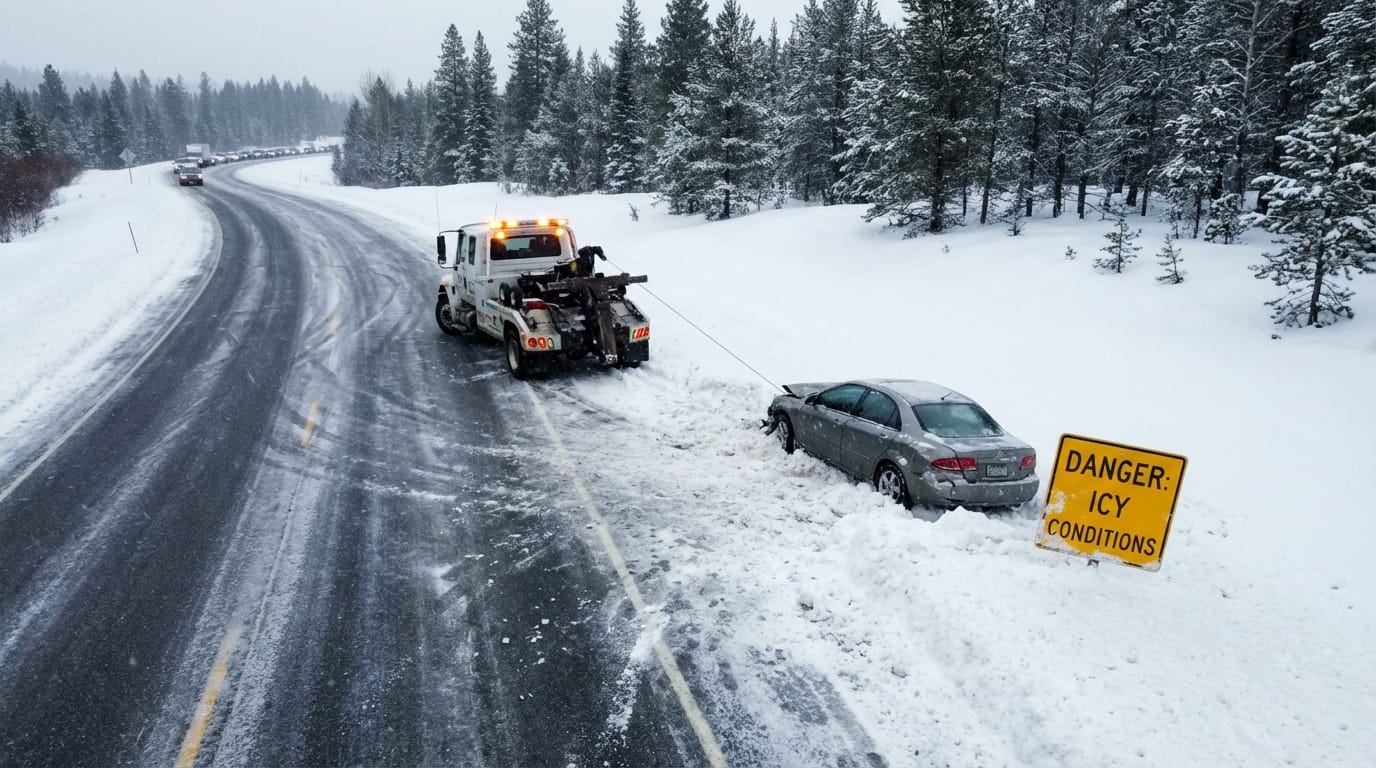
Winter in Utah brings breathtaking mountain scenery, but it also transforms our daily commute into a treacherous navigation of icy roads that demands your full attention. Understanding how to adjust your driving habits during these freezing months is crucial for keeping you, your passengers, and your vehicle safe on the highway.
The Reality of Winter Driving in 2026
As we settle into January 2026, Salt Lake City has already seen its fair share of freezing temperatures and precipitation. Modern vehicles are equipped with advanced safety features like traction control and anti-lock braking systems (ABS), but technology cannot defy the laws of physics. When pavement freezes, friction is lost, and the margin for error disappears.
Statistics consistently show that January is one of the most dangerous months for driving in Utah. Whether you are commuting down I-15 or navigating the steep avenues of the Avenues, the road conditions can change from dry to slick in a matter of minutes. Being aware of the most common driver errors is the first step toward accident prevention.
7 Deadly Mistakes Drivers Make on Icy Surfaces
Even seasoned locals can fall victim to complacency. Below are the seven most dangerous errors drivers make when navigating icy roads, along with tips on how to avoid them.
1. Overconfidence and Speeding
The most common mistake is simply driving too fast for conditions. Just because the speed limit says 65 mph does not mean it is safe to travel at that speed during a winter storm. Four-wheel drive (4WD) helps you get going, but it does absolutely nothing to help you stop. On ice, your stopping distance can increase by up to ten times compared to dry pavement.
2. Slamming on the Brakes
When a driver feels their car slide, the natural instinct is to slam on the brakes. However, this locks up your wheels (if you don’t have ABS) or triggers the ABS so aggressively that you lose the ability to steer.
“Panic braking is the enemy of winter driving. It transfers weight abruptly to the front of the vehicle and often breaks whatever traction you had left, turning a minor slip into an uncontrolled spin.”
3. Following Too Closely
Tailgating is annoying in the summer, but it is deadly in the winter. You need to increase your following distance significantly. The “two-second rule” should become the “eight-to-ten-second rule” when driving on icy roads. This gives you enough time to react if the car in front of you spins out or stops suddenly.
4. Ignoring Tire Health
Your tires are the only point of contact between your vehicle and the road. If the tread is worn, or if you are using summer tires, you are putting yourself at immense risk.
| Tire Type | Best Use Case | Performance on Ice |
|---|---|---|
| Summer Tires | Warm, dry, or wet weather | Poor/Dangerous |
| All-Season Tires | Moderate climates, light snow | Moderate (Hardens in extreme cold) |
| Winter/Snow Tires | Temperatures below 45°F, snow, ice | Excellent (Soft rubber grips ice) |
5. Using Cruise Control
This is a lesser-known but critical mistake. Cruise control is designed to maintain a constant speed. If your car hits a patch of black ice while cruise control is on, the system may interpret the loss of traction as a drop in speed and attempt to accelerate. This sudden burst of power causes the wheels to spin faster, sending the vehicle into a skid. Never use cruise control on wet, snowy, or icy surfaces.
6. Overcorrecting a Slide
When the rear of the vehicle starts to slide out, many drivers panic and steer hard in the opposite direction. This often results in “fishtailing,” where the car snaps back violently the other way, often leading to a rollover or ditch excursion.
The correct technique:
- Stay calm and take your foot off the accelerator.
- Do not slam on the brakes.
- Steer gently into the skid (turn the wheel the same way the rear is sliding).
- As the car straightens out, straighten the wheel.
7. Being Unprepared (No Emergency Kit)
Getting stuck is bad; getting stuck without supplies is worse. In 2026, we rely heavily on cell phones, but batteries die quickly in the cold, and signal isn’t guaranteed in canyons. Every vehicle in Salt Lake City should have a winter emergency kit containing:
- Jumper cables or a portable jump starter
- A warm blanket and extra gloves
- A flashlight with fresh batteries
- Non-perishable snacks and water
- A bag of sand or kitty litter (for traction)
- A collapsible shovel
Navigating Black Ice in Salt Lake City
Black ice is transparent ice that forms on the roadway, blending in perfectly with the asphalt. It is most common on bridges, overpasses, and shaded areas of the road where the sun doesn’t hit.
If you suspect icy roads, look for glossy sheen on the pavement. If the road looks wet but there is no spray coming from the tires of other vehicles, it is likely frozen. In these situations, reduce your speed immediately by lifting off the gas—do not brake—and proceed with extreme caution.
When to Call the Professionals
Sometimes, despite your best efforts and preparation, the weather wins. You might slide into a snowbank, suffer a flat tire from hidden debris, or find your battery dead from the cold. In these moments, safety is the priority. Stay inside your vehicle if you are on a busy highway and wait for professional help to arrive.
At Salt Lake Towing, we have over 200+ 5-star reviews because we treat every call as an emergency. We specialize in safe recovery from slick conditions, ensuring that your vehicle is extracted without causing further damage.
Conclusion
Driving in January requires patience, preparation, and a healthy respect for the elements. If you find yourself stranded or in need of recovery services, do not hesitate to call our dispatch team immediately at 801-701-1233 for fast, reliable service. For more information on how we can help keep you moving this winter, visit Salt Lake Towing’s dedicated team page.