
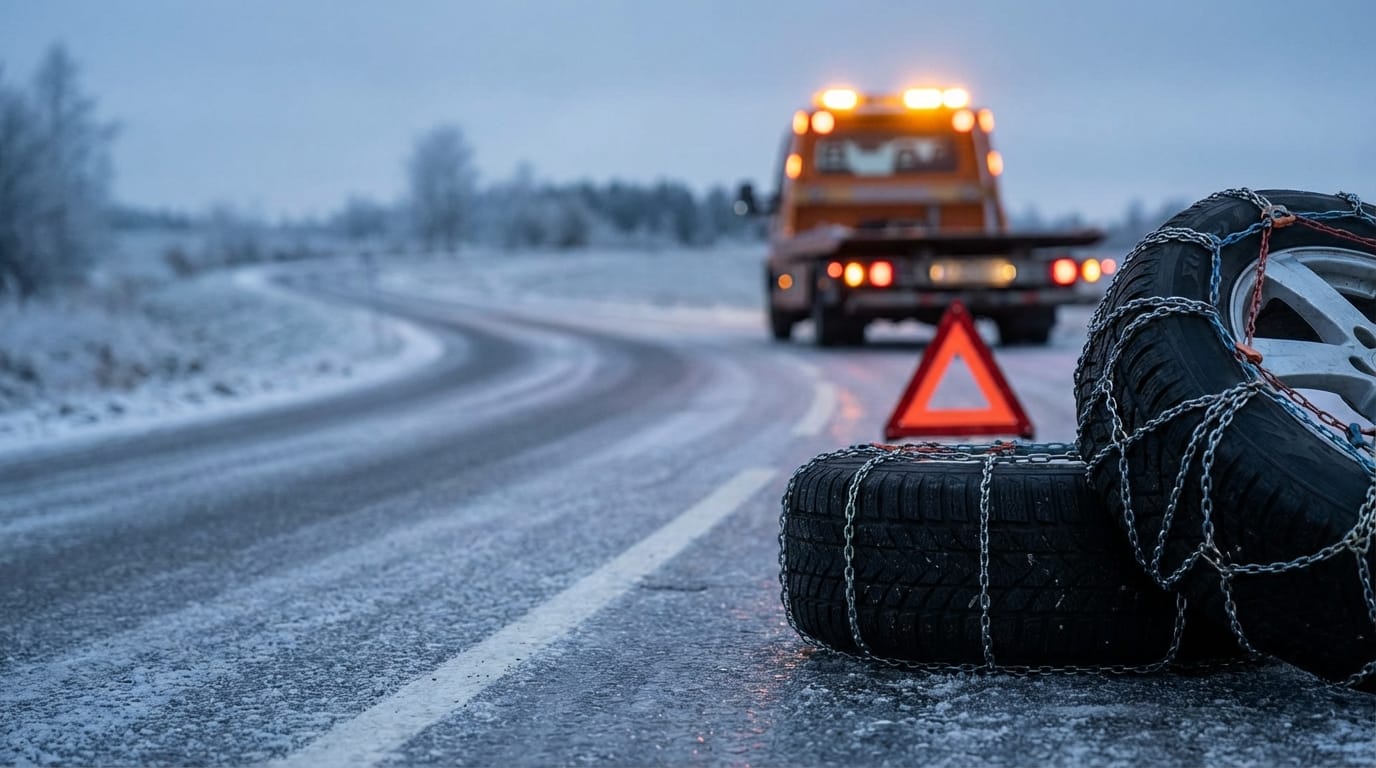
Winter in Salt Lake City has hit hard this January 2026, transforming our daily commutes into high-stakes challenges that require total focus behind the wheel. Navigating icy roads demands more than just a sturdy vehicle; it requires specific driving techniques, advanced preparation, and a healthy respect for the freezing conditions.
The Reality of Winter Driving in 2026
As we move through mid-January, Utah drivers are facing some of the most fluctuating temperatures we have seen in years. This freeze-thaw cycle creates the perfect environment for treacherous driving surfaces. While modern vehicles are equipped with advanced traction control systems, technology cannot entirely overcome the laws of physics. Understanding how to react when your tires lose their grip is essential for keeping you and your family safe.
“The difference between a safe arrival and a roadside emergency often comes down to a split-second decision made on a patch of ice. Preparation is the only variable you can control.”
7 Essential Tips for Conquering Slick Streets
At Salt Lake Towing, we have seen firsthand the consequences of unprepared driving. To help you avoid a call to our dispatch center, here are seven critical tips for handling icy roads effectively.
1. Master the Art of Deceleration
When the pavement is frozen, your brakes are not your best friend—your accelerator is. The moment you see brake lights ahead or approach a curve, lift your foot off the gas immediately. Slamming on the brakes on ice will almost guarantee a lock-up or a slide. Plan your stops three times earlier than you would on dry pavement.
2. Increase Your Following Distance
The “three-second rule” is standard for dry conditions, but on icy roads, this needs to be extended significantly. In January conditions, we recommend an 8 to 10-second gap between you and the vehicle in front of you. This buffer gives you the necessary room to react if the car ahead spins out or stops abruptly.
3. Don’t Be Overconfident in 4WD or AWD
One of the most common misconceptions we encounter is that Four-Wheel Drive (4WD) helps you stop. It does not. 4WD helps you go by providing power to all wheels to get moving in snow, but it offers zero advantage when trying to brake on ice. Treat your AWD vehicle with the same caution you would a sedan.
4. Watch for “Black Ice” Indicators
Black ice is transparent, coating the road without changing its appearance, often looking like simple wet pavement. Be hyper-aware of:
- Bridges and overpasses (they freeze first).
- Shadowed areas of the road that receive no sunlight.
- Pavement that looks dull black rather than shiny gray.
- A sudden lack of water spray from the tires of vehicles in front of you.
5. Optimize Your Visibility and Vehicle Clearance
You cannot avoid hazards you cannot see. Before leaving your driveway, ensure your vehicle is completely cleared of snow—including the roof. Snow flying off your roof can blind drivers behind you or slide down onto your own windshield when you brake. Furthermore, keeping your headlights clear is vital for navigating snow and ice during the dark winter mornings.
6. Know How to Correct a Slide
If you hit a patch of ice and feel the rear of your car sliding, panic is your enemy. Do not slam on the brakes. Instead, steer gently in the direction you want the front of the car to go. If your rear wheels are sliding right, turn your steering wheel right. As the car straightens out, straighten the wheel. Over-correcting can cause the vehicle to snap back in the opposite direction, leading to a spin.
7. Keep an Emergency Kit On Board
Even the best drivers can end up stranded. Whether you slide into a ditch or suffer a mechanical failure due to the cold, having supplies is non-negotiable. Your kit should include blankets, non-perishable food, a flashlight, and jumper cables. If the worst happens, reliable towing companies can assist after crashes to recover your vehicle safely, but you need to stay warm while you wait.
Stopping Distances: The Data
To illustrate why speed reduction is critical, consider the physics of stopping on different surfaces. The following table highlights average stopping distances for a standard passenger vehicle.
| Road Condition | Speed | Thinking Distance | Braking Distance | Total Stopping Distance |
|---|---|---|---|---|
| Dry Pavement | 60 MPH | 60 ft | 180 ft | 240 ft |
| Wet Pavement | 60 MPH | 60 ft | 240 ft | 300 ft |
| Icy Roads | 60 MPH | 60 ft | 900+ ft | 960+ ft |
*Note: These figures are estimates. Actual distances vary based on tire tread, vehicle weight, and ice thickness.
What To Do If You Get Stuck
Despite your best efforts, the severity of Salt Lake City winters means that sliding off the road is sometimes unavoidable. If you find yourself stuck in a snowbank or unable to gain traction on an incline, safety is the priority. Stay inside your vehicle where it is warm and safe from other traffic.
Attempting to push your vehicle out on a slick highway is incredibly dangerous. Instead, call for professional help on the road immediately. Professional tow operators have the winching equipment and safety gear necessary to extract your vehicle without causing further damage to the suspension or bodywork.
The Role of Vehicle Maintenance
Prevention starts in the garage. Weak batteries die faster in the cold, and worn tires are useless on ice. Ensure your antifreeze is topped off and your battery has been load-tested for the 2026 season. If you are unsure if your vehicle is ready for a long winter commute, consult a mechanic. However, if a mechanical failure occurs mid-drive, remember that we provide secure vehicle transport to get you and your car to a repair shop safely.
Stay Safe This Winter
Driving on icy roads is a skill that requires patience and practice. By slowing down, increasing your following distance, and preparing your vehicle, you significantly reduce your risk of an accident. We want everyone in our community to make it home safely this winter season.
If you find yourself in a slide, stranded in a snowbank, or facing a breakdown in freezing temperatures, don’t hesitate to call the experts at Salt Lake Towing at 801-701-1233. We are available 24/7 to assist you, so please visit our team page to learn more about the experienced drivers dedicated to your safety. Stay warm and drive safe!