
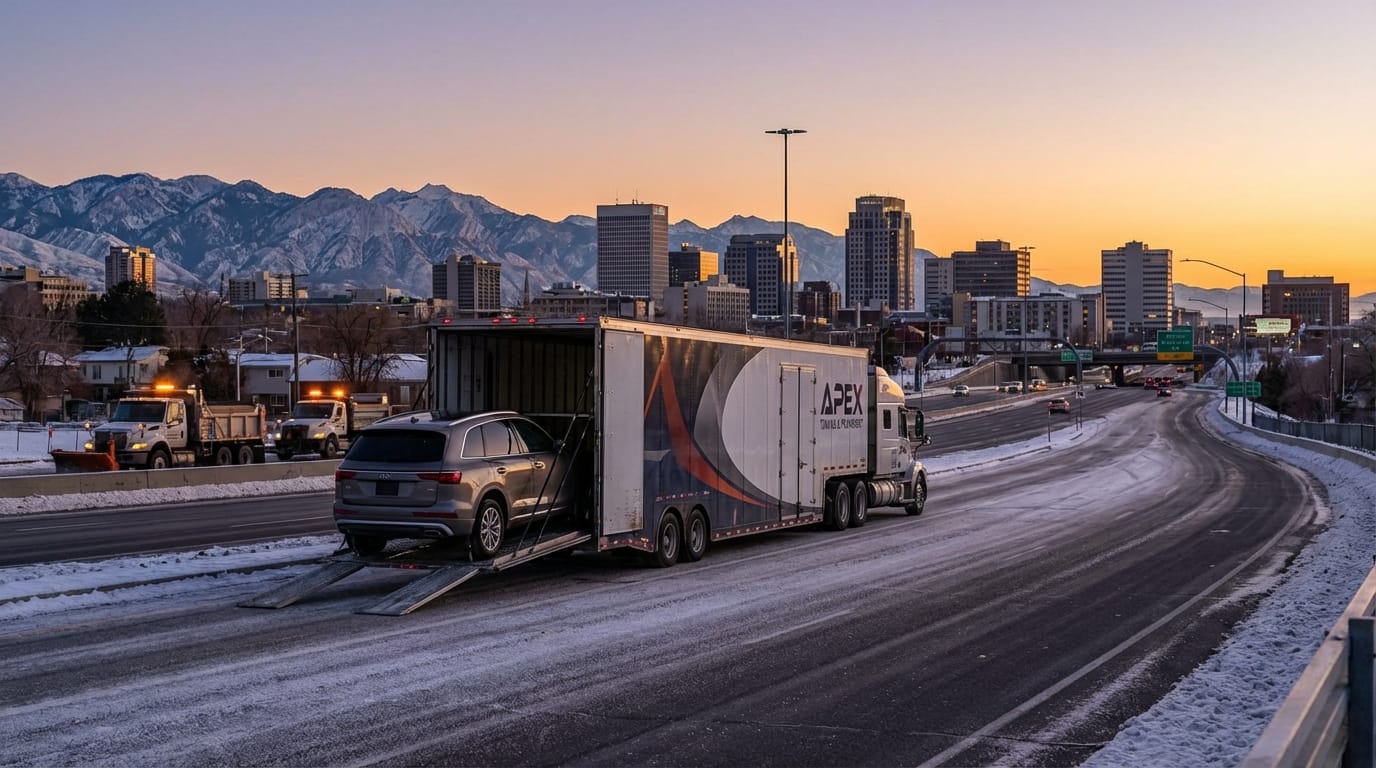
Moving a car across the Wasatch Front demands more than a simple hitch; it requires calculated logistics and specialized equipment to handle elevation changes and icy conditions. We provide professional vehicle transport ensuring your asset arrives in Salt Lake City without salt damage, mechanical strain, or winter collision risks.
Defining Vehicle Transport in the Wasatch Context
Many drivers conflate standard roadside towing with vehicle transport. While they share equipment, the objectives differ fundamentally. Roadside towing is reactive—a response to a breakdown, flat tire, or accident on I-15. Vehicle transport is proactive. It is the planned movement of a functioning or non-functioning vehicle from Point A to Point B, often over longer distances or for specific logistical reasons.
In Salt Lake City, this distinction is critical. Our geography creates unique challenges. Transporting a collector car from Sugar House to a storage facility in Park City involves a 3,000-foot elevation gain and exposure to severe micro-climates. Moving a fleet of sedans from the airport to a dealership in Sandy requires navigating high-volume traffic corridors where sudden stops are frequent. Vehicle transport is not merely dragging a car; it is the secure management of that vehicle’s position and condition throughout the journey.
We see three primary categories of transport requests in the Salt Lake Valley:
- Seasonal Relocation: Residents moving vehicles to warmer climates (like St. George or Arizona) to avoid the harsh Northern Utah winter.
- Dealership & Auction Logistics: Moving inventory between lots or delivering purchases to buyers who prefer not to drive a new car through slush.
- Specialty Vehicle Movement: Transporting AWD vehicles, luxury cars, or lowered modified cars that cannot be driven on salt-covered roads without risking undercarriage corrosion or paint damage.
Understanding the terrain is part of the definition. A transport route taking I-80 through Parleys Canyon requires different securing mechanisms than a flat tow across the Salt Lake Valley floor. The shifting weight of a vehicle on a flatbed during a 6% grade descent puts immense stress on straps and chains. Professional transport accounts for these physics, whereas amateur attempts often result in load shifts or catastrophic failure.
Strategic Analysis: Methods and Winter Risk Data
Choosing the right transport method is an engineering decision, not just a price comparison. In Utah, the prevalence of All-Wheel Drive (AWD) and Four-Wheel Drive (4WD) vehicles dictates specific transport protocols. Towing an AWD Subaru or Audi with two wheels on the ground can destroy the center differential in miles. We prioritize flatbed transport to eliminate this risk entirely.
Winter conditions amplify the stakes. Utah Department of Transportation (UDOT) data indicates that crash rates spike significantly during the first major snowfalls of the season [1]. When you drive your own vehicle or use a tow dolly during these windows, you expose yourself to these statistical probabilities. Professional transport removes your vehicle from the road surface, placing it securely on a heavy-duty platform operated by a driver trained in skid control.
The following table breaks down transport methods and their viability for Salt Lake City winters:
| Transport Method | Mechanism | Winter Risk Profile | Ideal Use Case |
|---|---|---|---|
| Flatbed (Rollback) | Vehicle sits entirely on the truck bed. | Low. Vehicle is elevated above road spray and salt. No tire wear. | AWD/4WD vehicles, luxury cars, severe winter weather moves. |
| Wheel Lift (Dolly) | Two wheels lifted, two on ground. | High. Rear wheels spin in slush. Differential damage risk for AWD. | Short-distance moves for 2WD vehicles only (rarely recommended in snow). |
| Enclosed Carrier | Vehicle inside a box trailer. | Lowest. Zero exposure to magnesium chloride or rock chips. | High-value classics, restoration projects, showroom delivery. |
| Tow Bar (Flat Tow) | All four wheels on ground. | Severe. No braking assist on ice. High jackknife risk. | Never recommended for winter transport in SLC. |
The Corrosion Factor
Utah roads are treated with magnesium chloride and sodium chloride. These salts lower the freezing point of water but are highly corrosive to steel and aluminum. When you drive a vehicle or tow it with wheels down, the undercarriage is blasted with a saline slurry. This accelerates rust on brake lines, suspension components, and exhaust systems. Flatbed transport significantly reduces this exposure by elevating the vehicle out of the direct “spray zone” created by tires, preserving the long-term integrity of the chassis.
Methodology: Executing a Safe Transport
Successful vehicle transport requires preparation. We don’t just show up and hook up; we follow a strict protocol to ensure safety and compliance. Follow these steps to prepare your vehicle for transport within or out of Salt Lake City.
- Document Pre-Transport Condition
Before we arrive, take high-resolution photos of your vehicle from four angles. Note any existing scratches or dents. This creates a baseline for liability. While we treat every car with white-glove care, having a record protects all parties. This is standard industry practice for legitimate operators. - Manage Fluid Levels
Ensure your gas tank is only 1/4 full. A full tank adds unnecessary weight (roughly 60-100 lbs), altering the center of gravity on the transport truck. However, verify that antifreeze levels are sufficient for freezing temperatures. If we transport a car from a heated garage in SLC to an outdoor lot, a weak coolant mixture can freeze and crack the engine block. - Disable Alarms and Toll Tags
A car alarm going off on the back of a flatbed on I-15 is a distraction to the driver and surrounding traffic. Disable your security system or provide us with the remote. Remove EZ-Pass or Express Lane transponders; scanners may register them as you pass under gantries, charging you tolls for a trip you aren’t driving. - Secure Loose Parts
Remove or secure spoilers, fog lights, and antennas that aren’t factory-welded. At highway speeds, the wind resistance on a backward-facing vehicle (common on multi-car carriers) differs from forward driving. Aftermarket parts often shear off. Fold in your mirrors. - Check Tire Pressure
Even if the car isn’t being driven, properly inflated tires are crucial for the tie-down straps to hold tension. A soft tire can compress under the strap’s force, causing the strap to loosen mid-transit. This allows the vehicle to bounce, potentially causing damage. - Address Leaks
If your vehicle leaks oil or transmission fluid, inform us immediately. We cannot load a leaking vehicle on the top deck of a multi-car carrier as it will drip onto the car below. We must position it on the lower deck or use a flatbed with spill containment.
For those needing immediate help due to a breakdown before a scheduled move, our roadside assistance teams can stabilize the situation before the transport truck arrives.
Nuance: The DIY Trap vs. Professional Liability
A common counter-argument to hiring professional transport is the “Do It Yourself” approach using a rental truck and trailer. On paper, this looks cheaper. In practice, specifically in Utah’s winter terrain, the risks outweigh the savings.
The Jackknife Physics
Towing a trailer significantly changes a vehicle’s handling. On icy patches—common on I-80 or the I-215 belt route—an unweighted towing vehicle can easily lose traction. If the trailer has momentum and the tow vehicle brakes, the trailer pushes the rear of the truck sideways, causing a jackknife. Most rental trailers lack advanced stability control or winter tires. Our trucks are equipped with heavy-duty chains, dual rear wheels for stability, and professional-grade braking systems designed to keep the load straight on a 6% icy grade.
Insurance Gaps
Most personal auto insurance policies do not cover damage to a vehicle being towed by a rental truck. If you slide into a guardrail in Parleys Canyon, you could be liable for the rental truck, the trailer, and the total loss of your own vehicle. Professional carriers like us carry “On-Hook” and “Garagekeepers” insurance. This means once we take possession of your vehicle, our policy covers it. If a strap fails or a rock strikes the windshield while in our care, you are protected. The peace of mind during a blizzard is worth the service fee.
The “Buddy” System
Asking a friend with a pickup truck to tow your car using a strap or chain is illegal on freeways in many jurisdictions and incredibly dangerous. Without rigid tow bars and supplemental braking, the towed car can crash into the towing truck during a stop. We frequently perform towing services for “buddy tows” that went wrong, resulting in two damaged vehicles instead of one moved car.
Future Outlook: EVs and Automated Logistics
The vehicle transport industry is undergoing a shift driven by the electrification of the automotive fleet. Salt Lake City has a high adoption rate of Electric Vehicles (EVs), which presents new challenges for transport.
Weight Implications: EVs are 20-30% heavier than their combustion counterparts due to battery packs. A standard flatbed that can legally carry a Ford F-150 might be overweight carrying a Rivian or Hummer EV. We are upgrading our fleet to handle higher payload capacities to remain compliant with DOT weight regulations. When booking transport for an EV, exact model details are crucial to ensure we dispatch the correct equipment.
Battery Safety: Transporting damaged EVs requires specific protocols. A compromised lithium-ion battery poses a fire risk that is difficult to extinguish. We are training our operators on thermal runaway indicators. In the future, we expect regulations requiring specialized “containment” transport for damaged EVs to prevent roadside fires.
Digital Integration: We are moving toward real-time telemetry for customers. Soon, you won’t just get an ETA; you will see the exact location of your vehicle on a map, monitor the speed of the transport truck, and receive digital condition reports instantly. This transparency builds trust and allows for better coordination, especially for business clients managing just-in-time inventory.
Final Thoughts on Transporting Your Vehicle
Transporting a vehicle in Salt Lake City is a logistical operation that demands respect for the weather, the terrain, and the mechanical limits of the car. Whether you are moving a child to college, sending a snowbird car south, or relocating a non-running project, the goal is arrival without incident.
Don’t risk your vehicle’s transmission or your safety on icy roads with amateur towing methods. Trust the local experts who understand the canyons and the salt. We handle the heavy lifting so you can focus on the destination.
Ready to move your vehicle?
Contact Salt Lake Towing today. We offer transparent quotes and reliable timelines.
- Call Dispatch: 801-701-1233
- Request a Quote: Visit Our Office
- Explore Services: Return to Home