
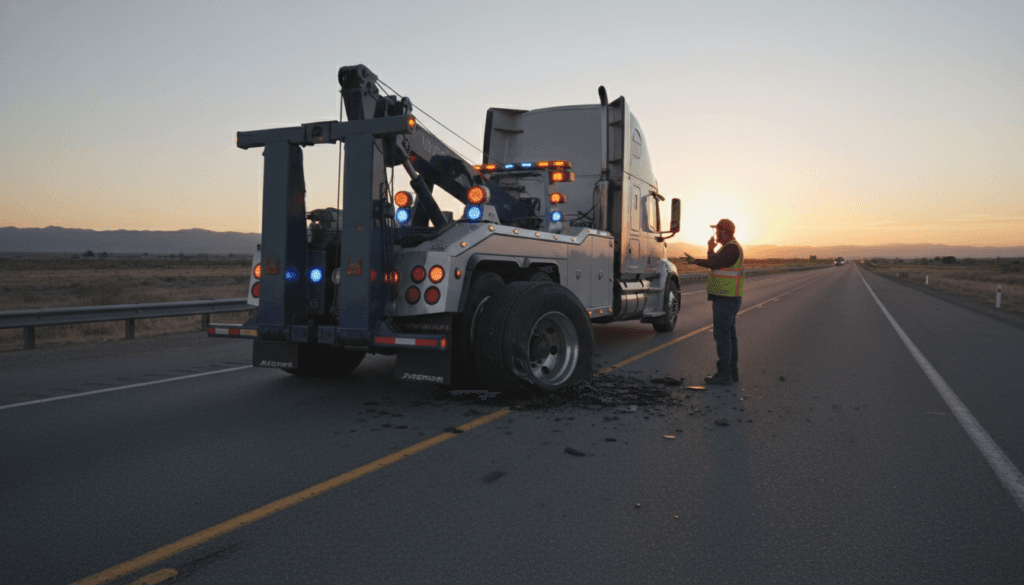
5 Warnings You Are About to Have a Blown Tire
Experiencing a blown tire while driving can be a sudden, frightening, and dangerous event, often leaving drivers stranded and unsure of how to proceed safely. Understanding the warning signs and knowing the correct actions to take can significantly mitigate risks and ensure your safety on the road.
Key Takeaways
A blown tire is a sudden, catastrophic failure of a vehicle’s tire, often caused by underinflation, road hazards, or excessive wear.
Recognizing early warning signs such as visible bulges, unusual vibrations, or strange noises can help prevent a full blowout.
When a tire blows, maintaining a firm grip on the steering wheel and gently easing off the accelerator are crucial for control.
Regular tire maintenance, including pressure checks and inspections, is the most effective way to prevent tire blowouts.
Professional roadside assistance, like that offered by Salt Lake Towing, provides essential help for safe recovery after a blown tire.
What is a Blown Tire?
A blown tire, also known as a tire blowout, is the rapid and often explosive loss of air pressure from a tire, typically resulting from a sudden rupture or structural failure in the tire’s sidewall or tread. This catastrophic event can lead to a loss of vehicle control and pose a significant safety risk to drivers and other motorists.
Understanding Tire Structure and Failure Points
A vehicle’s tire is a complex component designed to support the car’s weight, absorb road shocks, transmit traction, and provide steering control, consisting of several layers that can be compromised leading to failure. The primary components include the tread, sidewall, bead, and inner liner, all working together to maintain integrity.
Tread: The outermost layer that contacts the road, providing grip and channeling water away. Excessive wear or punctures here can lead to blowouts.
Sidewall: The flexible rubber section between the tread and the wheel rim, protecting the internal plies. Damage to the sidewall is a common cause of sudden failure.
Carcass Plies: Layers of fabric (polyester, rayon, nylon) or steel cords embedded in rubber that give the tire its strength and shape. Separation or damage to these plies can cause structural weakness.
Bead: A high-strength steel cable bundle coated in rubber that seals the tire to the wheel rim. A compromised bead can lead to rapid air loss.
A tire blowout occurs when one of these critical components fails under stress, often due to a combination of factors, leading to a rapid and uncontrolled release of air. This rapid deflation can cause the tire to shred, making it impossible to drive on.
Common Causes of a Blown Tire
Blown tires are predominantly caused by a combination of improper maintenance, environmental factors, and driver behavior, with underinflation being a leading culprit. Understanding these causes is the first step in prevention.
Underinflation and Overinflation
Incorrect tire pressure, whether too low or too high, significantly increases the risk of a blowout. Underinflation is the most common cause, leading to excessive heat buildup and structural fatigue.
Underinflation: When a tire is underinflated, its sidewalls flex more than intended, generating excessive friction and heat. This heat can break down the tire’s internal structure, leading to tread separation and a blowout. According to industry reports, underinflation accounts for approximately 75% of tire blowouts.
Overinflation: While less common as a direct cause of blowouts, an overinflated tire has a smaller contact patch with the road and is more rigid. This makes it more susceptible to damage from impacts with road hazards, potentially leading to a rupture.
Maintaining the manufacturer’s recommended tire pressure, typically found on a sticker inside the driver’s side door jamb or in the owner’s manual, is crucial. Checking tire pressure at least once a month, and especially before long trips, is a simple yet effective preventative measure. As of 2026-01-18, modern vehicles often include Tire Pressure Monitoring Systems (TPMS) to alert drivers to significant pressure drops.
Road Hazards and Potholes
Impacts from road hazards such as sharp objects, debris, and potholes can cause immediate or delayed tire failure, even in properly inflated tires. The force of hitting a deep pothole or sharp object can bruise or cut the tire’s internal structure.
Punctures: Nails, screws, glass, or other sharp debris can penetrate the tire, causing a slow leak or a rapid deflation if the object creates a large enough hole.
Impact Damage: Hitting potholes, curbs, or other obstacles at speed can pinch the tire against the wheel rim, causing a “pinch flat” or damaging the sidewall internally without immediate visible signs. This internal damage can weaken the tire, leading to a blowout later.
Drivers in areas like Salt Lake City, especially during winter months when roads can be more prone to potholes, should remain vigilant for road debris and hazards. Avoiding sudden impacts can save your tires from critical damage.
Excessive Wear and Tear
Tires have a finite lifespan, and prolonged use or aggressive driving can accelerate wear, making them more prone to failure. Worn tires have less tread, which reduces grip and makes them more vulnerable to punctures and heat buildup.
Insufficient Tread Depth: The legal minimum tread depth is typically 2/32 of an inch. Tires below this depth offer poor traction, especially in wet conditions, and are more susceptible to punctures and blowouts because the protective rubber layer is thinner.
Age of Tires: Even if a tire has sufficient tread, its rubber compounds degrade over time due to exposure to elements like UV light and ozone. Most tire manufacturers recommend replacing tires after 6-10 years, regardless of mileage, as older tires are more prone to structural failure.
Misalignment and Unbalanced Wheels: Improper wheel alignment or unbalanced tires can cause uneven wear patterns, such as feathering or cupping, which shorten tire life and create weak spots.
Regular inspections for tread depth and uneven wear are critical. If you notice significant wear, it’s time to consider new tires. For professional advice on tire maintenance and replacement, consider visiting Salt Lake Towing’s guide on preventing tire blowouts.
Overloading Your Vehicle
Exceeding your vehicle’s maximum load capacity places immense stress on the tires, generating excessive heat and increasing the likelihood of a blowout. Every vehicle has a Gross Vehicle Weight Rating (GVWR) that should not be surpassed.
The added weight forces the tires to flex beyond their design limits, leading to rapid heat buildup and potential internal damage to the tire’s plies and cords.
A tire under extreme load can experience tread separation or sidewall rupture even if properly inflated initially.
Always check your vehicle’s payload capacity, usually found in the owner’s manual or on a sticker inside the driver’s door. Distribute weight evenly when hauling heavy loads to minimize stress on individual tires.
Manufacturing Defects
While less common due to stringent quality control, a small percentage of tire blowouts can be attributed to manufacturing defects. These defects might include faulty materials, improper construction, or design flaws that compromise the tire’s integrity.
Such defects might not be immediately apparent and can manifest as premature tread separation or sidewall bubbling even on relatively new tires.
If a tire blowout occurs on a new tire without apparent external damage or improper inflation, a manufacturing defect might be the underlying cause.
Always purchase tires from reputable dealers and keep records of your purchase for warranty purposes. If you suspect a manufacturing defect, contact the tire manufacturer or the retailer immediately.
5 Warnings You Are About to Have a Blown Tire
Recognizing the subtle and not-so-subtle warning signs that a tire is about to fail can provide crucial seconds or minutes to react, potentially preventing a dangerous blowout. Pay attention to how your vehicle feels and sounds.
1. Visible Bulges or Cracks
Visible bulges (often called “blisters” or “bubbles”) or deep cracks in the tire’s sidewall or tread are critical indicators of internal structural damage and an imminent blowout risk. These deformities signify that the tire’s internal plies have weakened or separated, allowing air pressure to push the rubber outwards.
A bulge indicates a potential weak spot that could burst under pressure, similar to an aneurysm.
Deep cracks, especially those exposing the tire’s cords, show severe degradation of the rubber, making the tire vulnerable to rupture.
Regularly inspect your tires for any visible signs of damage, especially after hitting potholes or curbs. If you spot a bulge or severe crack, replace the tire immediately; it is not safe to drive on.
2. Excessive Vibrations or Shaking
Unusual or excessive vibrations felt through the steering wheel, floorboard, or seats, particularly at higher speeds, can be a warning sign of an impending tire issue, including a potential blowout. These vibrations often indicate an imbalance or structural problem within the tire.
The vibrations might start subtly and worsen over time as the tire’s integrity further degrades.
This could be due to a developing belt separation or an internal defect causing the tire to become out of round.
While vibrations can also stem from other vehicle issues, persistent or worsening tire-related vibrations warrant immediate inspection by a professional.
3. Unusual Noises (Thumping, Slapping)
New and unusual noises emanating from a tire, such as a rhythmic thumping, flapping, or slapping sound, often indicate that a part of the tire is separating or damaged and could lead to a blowout. These sounds are typically caused by a loose piece of tread or a damaged internal component making contact with the road or fender.
A distinct “thump-thump-thump” sound that increases with vehicle speed can signal a developing bulge or tread separation.
A “slapping” sound might indicate a piece of the tread or sidewall is flapping loose.
Any new, persistent, or worsening tire noise should be investigated promptly. Don’t ignore these auditory warnings.
4. Changes in Steering or Handling
A noticeable change in your vehicle’s steering or overall handling characteristics, such as a sudden pull to one side or a feeling of looseness in the steering, can be an early indicator of a tire problem that could lead to a blowout. These changes occur as the tire loses its structural integrity or begins to deflate unevenly.
A persistent pull to the left or right could indicate a slow leak or internal damage to a tire on that side.
A “spongy” or “mushy” feeling in the steering can suggest that a tire is losing air pressure and losing its rigidity.
If your vehicle suddenly feels different to drive, especially concerning its stability or steering response, have your tires checked immediately. This could be a critical warning sign. For more information on maintaining your vehicle’s health, including its tires, consider learning about the benefits of roadside assistance.
5. Rapid Air Loss or Slow Leaks
While not an immediate blowout, experiencing rapid air loss or persistent slow leaks without an obvious puncture can indicate a deeper structural issue within the tire that could eventually lead to a blowout. A tire that repeatedly loses air may have a compromised bead seal, a porous rubber compound, or internal damage that affects its ability to hold pressure.
If you find yourself frequently reinflating a specific tire, it’s a sign that something is amiss internally or with the wheel.
Even a small, unrepairable leak can weaken the tire over time, making it more susceptible to a sudden blowout under stress.
Don’t ignore recurring low tire pressure warnings. Get the tire inspected by a professional to identify the source of the leak and determine if the tire can be safely repaired or if it needs replacement.
What to Do When Your Tire Blows Out
If you experience a tire blowout, the most critical actions are to remain calm, maintain control of your vehicle, and safely bring it to a stop away from traffic. Panic can lead to overcorrection and further danger.
Grip the Steering Wheel Firmly: A blown tire will often cause a sudden pull in the direction of the blown tire. Hold the steering wheel with both hands, keeping it as straight as possible.
Do NOT Slam on the Brakes: Suddenly braking can cause your vehicle to swerve uncontrollably, especially if a front tire has blown. Gently ease your foot off the accelerator.
Maintain Momentum (Initially): Allow the vehicle to slow down gradually. If it pulls severely, a very light, controlled acceleration might help you regain some control and stabilize the vehicle before you start to slow down.
Signal and Steer to Safety: Once you have regained some control and the vehicle is slowing, activate your turn signal and carefully guide the vehicle to the shoulder or a safe, level spot away from traffic.
Gently Apply Brakes: Only when the vehicle has slowed significantly and you have a firm grip on the steering, gently apply the brakes to come to a complete stop.
Activate Hazard Lights: Once safely stopped, turn on your hazard lights to alert other drivers.
Assess the Situation: If it’s safe to do so, inspect the damage. If you’re on a busy highway or in an unsafe location, do not attempt to change the tire yourself.
Call for Roadside Assistance: For safety and convenience, especially if you’re unsure how to change a tire or if the situation is hazardous, contact a professional towing service like Salt Lake Towing. We are equipped to handle such emergencies and can safely transport your vehicle or provide a tire change. You can reach us at 801-701-1233.
Preventative Measures to Avoid Blown Tires
Preventing tire blowouts is largely about proactive maintenance and mindful driving habits, which can extend the life of your tires and enhance overall safety. Regular checks and adherence to manufacturer guidelines are paramount.
Regular Tire Pressure Checks
Checking your tire pressure monthly, and especially before long trips, is the single most effective way to prevent blowouts caused by underinflation. Use a reliable tire pressure gauge and inflate tires to the PSI (pounds per square inch) recommended by your vehicle manufacturer, not the maximum pressure listed on the tire itself.
The correct PSI is usually found on a sticker inside the driver’s side door jamb or in your owner’s manual.
Tire pressure should be checked when tires are “cold,” meaning they haven’t been driven for at least three hours or more than a mile.
Underinflation can reduce fuel economy by up to 0.3% for every 1 PSI drop in all four tires, according to a recent study by the U.S. Department of Energy, in addition to increasing blowout risk.
Routine Tire Inspections
Visually inspect your tires regularly for signs of wear, damage, or foreign objects. This simple routine can catch problems before they escalate.
Look for cuts, cracks, bulges, or punctures in the sidewall and tread.
Check tread depth using the “penny test” (if Lincoln’s head is fully visible, your tread is too low).
Inspect for uneven wear patterns, which can indicate alignment issues.
Remove any small stones or debris lodged in the tread grooves.
Consider professional tire rotations and wheel alignments every 5,000-7,500 miles to ensure even wear and extend tire life.
Proper Vehicle Loading
Always adhere to your vehicle’s maximum load capacity to prevent undue stress on your tires. Overloading is a common oversight that can lead to blowouts, especially on long journeys.
Consult your vehicle’s owner’s manual or the placard on the driver’s side door jamb for the maximum payload and seating capacity.
When hauling heavy items, distribute the weight as evenly as possible.
Mindful Driving Habits
Your driving style significantly impacts tire longevity and safety. Aggressive driving and neglecting road conditions can prematurely wear out tires and increase blowout risk.
Avoid hitting potholes, curbs, and road debris whenever possible.
Drive at appropriate speeds, especially on rough roads, to reduce impact forces on tires.
Avoid sudden acceleration and hard braking, which increase tire wear.
By adopting these preventative measures, you can significantly reduce your chances of experiencing a blown tire and ensure a safer driving experience in and around Salt Lake City. For situations requiring professional help, remember Salt Lake Towing offers reliable flatbed towing services to safely transport your vehicle after a tire emergency.
Why Professional Roadside Assistance is Crucial for Blown Tires
When you experience a blown tire, especially on a busy road or in inclement weather, professional roadside assistance is invaluable for ensuring your safety and the safe recovery of your vehicle. Attempting a tire change in hazardous conditions can put you at significant risk.
Safety First: Roadside professionals are equipped with safety gear and training to work alongside traffic, minimizing the danger to you and your vehicle.
Expertise and Equipment: Towing companies like Salt Lake Towing have the right tools and expertise to safely remove a damaged tire, install a spare, or transport your vehicle if necessary.
Timely Response: A rapid response from a local towing service means less time stranded on the side of the road, reducing exposure to traffic and environmental elements.
Proper Disposal: They can also assist with the proper disposal or transport of the damaged tire.
Salt Lake Towing is Salt Lake City’s #1 Towing Company, with over 200+ 5-star reviews, specializing in roadside assistance, including tire changes and towing. When a blown tire leaves you stranded, trust our experts to provide prompt, professional, and courteous service. You can learn more about our services at https://saltlaketowtruck.com/about-us/.
FAQ Section
What is the most common cause of a tire blowout?
The most common cause of a tire blowout is underinflation, which leads to excessive heat buildup within the tire’s structure, causing it to weaken and eventually rupture. Road hazards and overloaded vehicles are also significant contributors.
How can I tell if my tire is about to blow out?
Warning signs of an impending blowout include visible bulges or deep cracks in the tire, unusual vibrations or shaking felt in the vehicle, strange thumping or slapping noises, and noticeable changes in steering or handling. Addressing these signs quickly can prevent a full blowout.
Is it safe to drive on a spare tire after a blowout?
Most spare tires, particularly “donut” or temporary spares, are designed for limited use and speed. It is generally safe to drive on a spare tire only for short distances at reduced speeds (typically 50 miles at 50 mph) to get to a service center for a full repair or replacement.
How often should I check my tire pressure?
You should check your tire pressure at least once a month, and always before embarking on a long trip. Tire pressure should be checked when the tires are cold for the most accurate reading, as recommended by vehicle manufacturers.
Can a flat tire cause a blowout?
Yes, driving on a flat tire can quickly lead to a blowout. When a tire is completely flat, the sidewalls are crushed and flex excessively, generating immense heat and causing irreversible internal damage that can result in the tire shredding or exploding.
Should I replace all four tires after one blows out?
Whether you need to replace all four tires depends on several factors, including the remaining tread depth of your other tires, whether your vehicle is all-wheel drive (AWD), and the age of the remaining tires. For AWD vehicles, it’s often recommended to replace all four to maintain drivetrain integrity if the tread difference is significant.
How does Salt Lake Towing help with blown tires?
Salt Lake Towing provides rapid roadside assistance for blown tires, including safe tire changes, spare tire installation, or flatbed towing services to transport your vehicle to a repair shop. Our team ensures your safety and minimizes your time stranded on the roadside.
Experiencing a blown tire can be a daunting experience, but understanding the causes, recognizing warning signs, and knowing how to react can significantly improve safety. Regular tire maintenance is your best defense against such incidents. If you ever find yourself with a blown tire in Salt Lake City, remember that Salt Lake Towing is just a phone call away at 801-701-1233, ready to provide expert roadside assistance and get you back on track quickly and safely.