
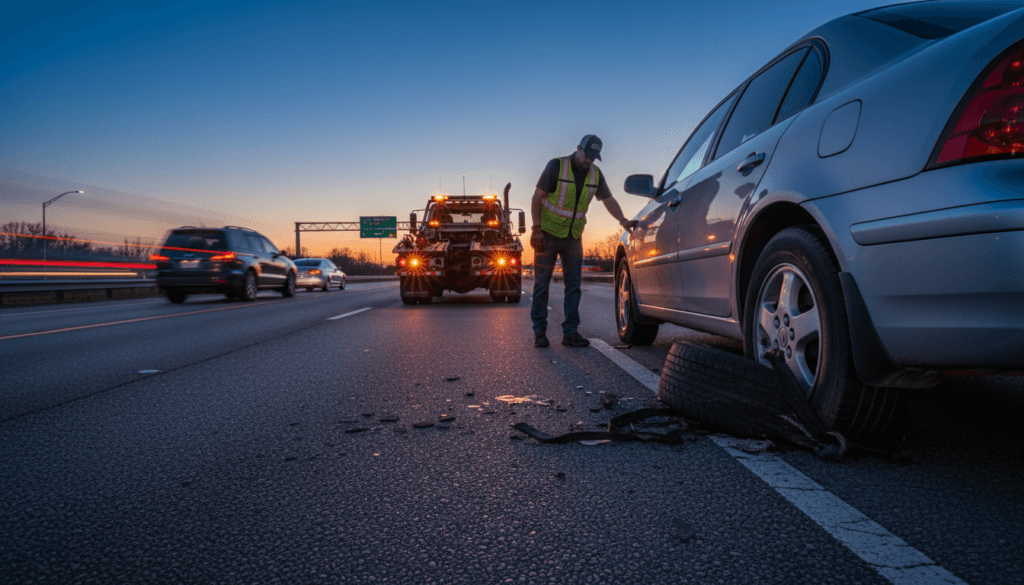
Did Your Tire Blow? What To Do Next
Experiencing a blown tire can be a startling and dangerous event for any driver, potentially leading to a loss of control and significant vehicle damage. Understanding what causes a tire to blow out and knowing the correct steps to take immediately afterward can significantly enhance your safety and minimize stress on the road.
Key Takeaways
- A tire blowout is the sudden and rapid deflation of a tire, often accompanied by a loud bang, and requires immediate, calm action to maintain control of your vehicle.
- Primary causes include underinflation, road hazards, overloading, and aged tires, all of which compromise tire integrity.
- If a blowout occurs, grip the steering wheel firmly, avoid sudden braking, and gently steer to a safe location before assessing the damage.
- Regular tire maintenance, including proper inflation and inspections, is crucial for preventing blowouts and ensuring road safety.
- When a blown tire leaves you stranded or unsure, professional roadside assistance from a trusted provider like Salt Lake Towing is your safest and most reliable solution.
What Exactly is a Blown Tire?
A blown tire, commonly known as a tire blowout, is the sudden and often explosive failure of a tire, resulting in a rapid loss of air pressure that can instantly compromise vehicle handling. This event typically occurs without warning and can be incredibly jarring, producing a loud noise and a noticeable jolt to the vehicle.
A tire blowout is defined as the abrupt and catastrophic failure of a tire’s structure, causing it to deflate almost instantaneously. This differs significantly from a slow leak, where air escapes gradually over time. The force of a blowout can be powerful enough to damage your vehicle’s fender, suspension, or even the braking system, making it a serious automotive emergency.
When a tire blows, the integrity of its sidewall or tread is compromised beyond repair, often tearing the rubber and exposing the internal cords. The rapid change in tire pressure and shape can cause your vehicle to pull sharply in the direction of the affected tire, demanding immediate and controlled driver response to prevent an accident.
Common Causes of Tire Blowouts
Tire blowouts are most frequently caused by a combination of factors, including underinflation, road hazards, overloading, and the age or condition of the tires. Understanding these common culprits is the first step in prevention.
Underinflation: The Silent Killer
Underinflation is the leading cause of tire blowouts because it causes excessive heat buildup within the tire, weakening its structure. When a tire is underinflated, more of its surface area flexes and contacts the road, generating friction and heat that can eventually lead to a catastrophic failure.
- Increased Flexing: When air pressure is too low, the tire sidewalls flex more than intended, especially at higher speeds.
- Heat Buildup: This excessive flexing generates significant heat, often exceeding the tire’s tolerance.
- Structural Breakdown: Prolonged exposure to high temperatures degrades the rubber and internal components, leading to eventual failure.
According to industry reports, underinflated tires contribute to a substantial percentage of roadside emergencies annually. For optimal safety and fuel efficiency, tires should be checked at least once a month, or before long trips, as recommended by vehicle manufacturers and tire experts as of 2026-01-18.
Road hazards such as potholes, sharp debris, and curbs can inflict sudden, severe damage to tires, leading to immediate blowouts or weakened spots that fail later. Even seemingly minor impacts can compromise a tire’s structural integrity.
- Potholes: Striking a deep pothole at speed can pinch the tire against the wheel rim, causing a “pinch flat” that often results in a blowout.
- Debris: Nails, screws, glass, and other sharp objects can puncture the tire, leading to a rapid loss of air and subsequent blowout.
- Curbs: Hitting a curb, especially at an angle, can damage the sidewall or bead of the tire, creating a weak point prone to failure.
Overloading: Exceeding Limits
Overloading your vehicle beyond its manufacturer-specified weight capacity puts undue stress on your tires, causing them to flex excessively and generate dangerous levels of heat. Every tire has a maximum load rating that should never be exceeded.
- Increased Pressure: More weight means more pressure on the tire’s contact patch with the road.
- Heat Generation: The added stress and friction lead to rapid heat accumulation, similar to underinflation.
- Reduced Performance: Overloaded tires also negatively impact vehicle handling, braking, and overall stability.
Always consult your vehicle’s owner’s manual or the sticker on the driver’s side door jamb for the recommended tire pressure and maximum load capacity. Ignoring these limits significantly increases your risk of a blowout.
Aged and Worn-Out Tires: Time’s Toll
Tires don’t last forever, even if they have plenty of tread. Over time, rubber degrades due to exposure to UV light, heat, and chemicals, leading to cracks and weakened spots that increase the likelihood of a blowout. This is known as dry rot.
- Rubber Degradation: Over several years, the compounds in tire rubber break down, making the tire brittle and prone to cracking.
- Tread Wear: Worn-out treads reduce traction and make tires more susceptible to punctures and heat buildup.
- Internal Damage: Older tires may have unseen internal damage to their belts or cords, which can suddenly fail under stress.
Most tire manufacturers and safety experts recommend replacing tires every 6-10 years, regardless of tread depth, due to the natural aging process of rubber. Always check the DOT code on your tire’s sidewall to determine its manufacturing date.
Immediate Steps When a Tire Blows
If you experience a blown tire while driving, your immediate, calm reaction is crucial for maintaining control of your vehicle and ensuring your safety. Do not panic, and resist the urge to slam on the brakes.
1. Grip the Steering Wheel Firmly
The very first action you should take is to grip the steering wheel with both hands, tightly and steadily, to counteract the sudden pull or jerk that will occur. A blown tire will cause your vehicle to pull strongly towards the side of the blown tire, and firm control of the steering wheel is essential to keep the car going straight.
“Maintaining a firm grip on the steering wheel is your primary defense against losing control during a tire blowout.”
2. Avoid Sudden Braking
Resist the natural instinct to slam on the brakes, as this can worsen the loss of control and potentially cause your vehicle to spin. Instead, apply the brakes gently and gradually, if at all, to slow down in a controlled manner.
- Weight Transfer: Hard braking shifts weight forward, which can destabilize a vehicle already struggling with a blown tire.
- Loss of Directional Control: Braking abruptly can cause the vehicle to veer sharply or even spin out of control.
- Gentle Deceleration: Allow the vehicle to slow down naturally, or apply very light, consistent pressure to the brake pedal.
3. Maintain Your Lane and Steer Straight
Focus on keeping your vehicle moving in as straight a line as possible, gently counter-steering against the pull caused by the blown tire. Your goal is to gradually reduce speed and move to a safe location off the road.
As the vehicle slows, the pull from the blown tire will become less severe, making it easier to steer. Look for a safe shoulder or exit to pull over, ensuring you don’t cut across lanes of traffic without ample warning and visibility.
4. Signal and Pull Over Safely
Once you have regained control and are slowing down, activate your hazard lights to alert other drivers to your situation. Carefully guide your vehicle to the safest possible location off the road, such as a wide shoulder or an emergency lane.
Ensure you are well away from moving traffic and on stable ground before exiting your vehicle. If you are on a busy highway and cannot safely pull over, it’s better to stay in a travel lane, maintaining control, until a safe pullover spot becomes available, even if it means driving a short distance on the damaged tire.
Safety Precautions After Pulling Over
After successfully pulling over with a blown tire, prioritize your safety and the safety of your passengers before attempting any repairs or calling for help. Your visibility to other drivers is paramount.
Ensure Visibility
Immediately after stopping, turn on your hazard lights and, if safe to do so, place reflective triangles or flares behind your vehicle, especially at night or in low visibility conditions. These devices create a buffer zone and alert oncoming traffic to your presence.
- Hazard Lights: These should be on the moment you begin to slow down and pull over.
- Reflective Gear: If you have reflective safety vests, wear them before exiting the vehicle.
- Warning Triangles/Flares: Position these at least 100 feet behind your vehicle to give drivers ample warning, especially on highways.
Stay Out of Traffic’s Way
Once your vehicle is safely off the road, ensure all occupants exit the vehicle on the side away from traffic, if possible. Wait in a safe location, such as behind a guardrail or a significant distance from the roadway, until assistance arrives.
Never attempt to change a tire on the shoulder of a busy highway if you feel unsafe or if traffic is moving too quickly. The risk of being struck by another vehicle far outweighs the inconvenience of waiting for professional help.
Preventative Measures to Avoid Blowouts
Proactive tire maintenance is the most effective way to prevent blown tires and ensure your safety on the road. Regular checks and responsible driving habits can significantly reduce your risk.
Regular Tire Pressure Checks
Maintaining correct tire pressure is the single most important preventative measure against blowouts. Improperly inflated tires are a primary cause of tire failure due to excessive heat buildup.
- Monthly Checks: Check your tire pressure, including the spare, at least once a month and before long trips using a reliable gauge.
- Cold Pressure: Always check tire pressure when the tires are cold, meaning they haven’t been driven on for at least three hours.
- Manufacturer Specifications: Inflate tires to the pressure recommended by your vehicle manufacturer, found on a sticker inside the driver’s side door jamb or in the owner’s manual, not the maximum pressure listed on the tire sidewall.
Routine Tire Inspections and Rotations
Visually inspecting your tires regularly for signs of wear, damage, or embedded objects can help identify potential problems before they escalate into a blowout. Tire rotations ensure even wear, extending tire life and maintaining performance.
| Maintenance Task | Frequency | Benefit for Blowout Prevention |
|---|---|---|
| Visual Inspection | Weekly/Before trips | Identifies cuts, bulges, embedded objects, and uneven wear. |
| Tire Rotation | Every 5,000-8,000 miles | Promotes even tread wear, preventing localized weakening and extending tire life. |
| Wheel Alignment | Annually/After significant impacts | Prevents uneven tire wear caused by misalignment, reducing stress points. |
Look for unusual bulges, cracks in the sidewall, or tread separation – these are critical indicators of internal damage. Addressing these issues promptly can prevent a catastrophic failure.
Don’t Overload Your Vehicle
Always adhere to your vehicle’s maximum load capacity to avoid putting undue stress on your tires. Overloading can lead to rapid heat buildup and premature tire failure.
Your vehicle’s owner’s manual specifies the Gross Vehicle Weight Rating (GVWR) and Gross Axle Weight Rating (GAWR). Adhering to these limits, especially when packing for a trip or hauling heavy items, is essential for tire longevity and safety.
When to Call for Professional Towing Assistance
While a spare tire might seem like a quick fix, there are many situations where calling for professional roadside assistance or towing is the safest and smartest option after a blown tire. Your safety should always come first.
Unsafe Location for Tire Change
If your vehicle is stranded in a dangerous spot, such as on a busy highway shoulder, a blind curve, or in inclement weather, attempting to change a tire yourself is extremely risky. Professional towers are equipped to handle these situations safely.
Roadside conditions, especially in the Salt Lake City area where weather can change rapidly as of 2026-01-18, can make a DIY tire change hazardous. Uneven ground, heavy traffic, or poor visibility all warrant calling for expert help.
No Spare Tire or Damaged Wheel
Many newer vehicles come with tire repair kits instead of full-sized spares, or sometimes no spare at all. If you don’t have a spare, or if the blown tire has also damaged your wheel rim, you’ll need a tow to a repair shop.
A tire repair kit is generally only effective for small punctures, not for a catastrophic blowout. If your wheel is bent or cracked, driving on it, even with a new tire, could be dangerous and cause further damage.
Lack of Tools or Physical Capability
Changing a tire requires specific tools (jack, lug wrench) and a certain level of physical exertion. If you lack the necessary tools, are unsure how to use them, or are physically unable to perform the task, professional assistance is readily available.
Don’t risk injury or further damage to your vehicle by attempting a task you’re not comfortable with. Salt Lake Towing provides expert roadside assistance, including tire changes and towing, for drivers in the Salt Lake City region. You can learn more about our services at Salt Lake Towing’s About Us page.
Peace of Mind and Expert Service
Sometimes, the best reason to call for a tow is simply for peace of mind. Knowing that experienced professionals are handling your situation allows you to focus on your safety and minimizes stress. With over 200+ 5-star reviews, Salt Lake Towing is a trusted name in roadside assistance.
When you encounter a blown tire, especially if you’re feeling overwhelmed or are in an unfamiliar area, don’t hesitate to reach out for reliable help. Our team is ready to assist you safely and efficiently. You can contact us directly at 801-701-1233.
Frequently Asked Questions About Blown Tires
What is the difference between a flat tire and a blown tire?
A flat tire typically involves a slow leak or gradual loss of air pressure, often due to a puncture, while a blown tire is a sudden, explosive, and complete loss of air pressure resulting from catastrophic tire failure.
How can I tell if my tire is about to blow out?
While blowouts are often sudden, warning signs can include excessive vibration, a noticeable bulge on the tire sidewall, deep cracks in the rubber, or uneven tread wear. Regular inspections can help identify these issues.
Is it safe to drive on a blown tire to a nearby gas station?
No, it is generally not safe to drive on a blown tire, as it can severely damage your wheel rim, suspension components, and braking system, making the vehicle dangerous to control. Pull over immediately to a safe location.
How much does it cost to fix a blown tire?
The cost to fix a blown tire depends on whether only the tire needs replacement or if the wheel rim and other vehicle components were also damaged. A new tire can range from $100-$300+, with additional costs for wheel repair or towing.
Does insurance cover a blown tire?
Whether insurance covers a blown tire depends on your policy. Comprehensive coverage might cover damage to the vehicle caused by the blowout, but usually not the cost of the tire itself unless the blowout was caused by another covered peril like hitting debris.
How often should I replace my tires to prevent blowouts?
Most tire manufacturers and automotive experts recommend replacing tires every 6 to 10 years, regardless of tread depth, due to the natural aging and degradation of the rubber compounds. Regular inspections are also key.
Can overloading my vehicle cause a tire to blow out?
Yes, overloading your vehicle beyond its manufacturer-specified weight limits puts excessive stress on your tires, causing them to flex more and generate dangerous levels of heat, which can lead to a blowout.
Dealing with a blown tire can be a stressful experience, but by understanding the causes, knowing how to react safely, and implementing preventative maintenance, you can significantly reduce the risk and impact. When the unexpected happens on the roads of Salt Lake City, remember that professional help is just a call away. Salt Lake Towing is dedicated to providing prompt, reliable roadside assistance to get you back on track safely. For trusted towing and emergency services, learn more about us by visiting our website or call us directly at 801-701-1233 for immediate assistance.